
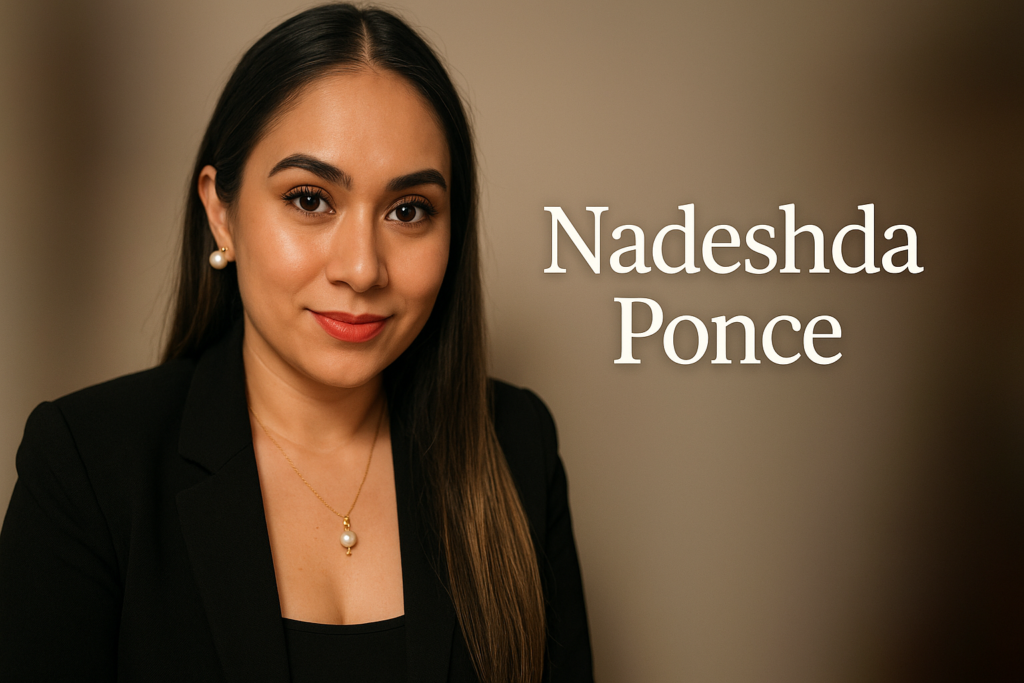

Nadeshda Ponce is gaining recognition as a distinctive voice in contemporary visual art. Her work explores themes of identity, migration, and cultural memory through mixed-media installations and paintings. For a complementary read on the same theme, see valerie guiliani – Valerie Giuliani: Public Life and Political Connections
Early Life and Artistic Foundations
Nadeshda Ponce was born in Quito, Ecuador, in 1992. She moved to the United States during her adolescence, an experience that deeply influenced her artistic perspective. Growing up between two cultures shaped her understanding of displacement and belonging. A reference profile of the subject is maintained on Nadeshda Ponce: Rising Star in the Spotlight – Wind Moon Magic
She pursued formal art education at the School of the Art Institute of Chicago, graduating in 2015. Her time in Chicago exposed her to diverse artistic communities and experimental techniques. This period marked the beginning of her signature style, which combines traditional Latin American motifs with contemporary abstraction.
Ponce’s early work often incorporated family photographs, handwritten letters, and textile fragments. These materials reflected her interest in personal and collective histories. She began exhibiting in local galleries while still a student, quickly drawing attention for her emotionally resonant pieces.
Artistic Style and Themes in Nadeshda Ponce’s Work
Nadeshda Ponce’s art is characterized by layered compositions and tactile surfaces. She frequently uses fabric, paper, and found objects to create depth and texture. Her color palette often includes earth tones and vibrant accents inspired by Andean textiles.
Central to her practice is the exploration of cultural hybridity. Ponce examines how identity is shaped by migration, language, and intergenerational memory. Her installations often invite viewers to reflect on their own experiences of place and belonging.
In 2020, she debuted a series titled “Borderlands,” which featured large-scale tapestries woven with synthetic and natural fibers. The series addressed the physical and emotional boundaries faced by immigrant communities. It was exhibited at the Museum of Contemporary Art in Tucson and received critical acclaim.
Ponce also incorporates sound and spoken word into some of her installations. These multimedia elements deepen the narrative quality of her work. She collaborates with poets and musicians to create immersive environments that engage multiple senses.
Recent Exhibitions and Public Recognition
In 2023, Nadeshda Ponce participated in a group exhibition at the Whitney Museum of American Art. Her contribution included a site-specific installation that responded to the museum’s architecture and urban context. The piece incorporated archival footage and ambient soundscapes.
She was also featured in the 2022 Biennial of the Americas in Denver, where she presented a new body of work focused on environmental resilience. The exhibition highlighted the impact of climate change on indigenous communities in the Andes.
Ponce has received support from several arts organizations, including a residency at the MacDowell Colony in 2021. These opportunities have allowed her to expand her practice and collaborate with other artists across disciplines.
Her work is held in private collections across North and South America. While not yet widely represented in major museum permanent collections, curators have noted her growing influence within contemporary art circles.
What Is Confirmed and What Remains Unverified
Details about her upcoming projects remain limited. Some sources suggest she is developing a public art commission for a cultural center in Los Angeles, but this has not been officially announced.
Claims about solo museum exhibitions in Europe or Asia appear to be speculative at this time.
Why Independent Artists Like Ponce Matter in Today’s Cultural Landscape
Artists such as Nadeshda Ponce contribute vital perspectives to conversations about identity and globalization. Their work challenges dominant narratives and amplifies underrepresented voices. In an era of increasing cultural polarization, such art fosters empathy and dialogue.
Ponce’s focus on hybrid identities resonates with younger generations navigating multicultural realities. Her use of accessible materials and community engagement models offers a blueprint for socially conscious art practices.
Supporting emerging artists ensures the continued evolution of contemporary art. It allows for experimentation and risk-taking that larger institutions may avoid. Ponce’s trajectory illustrates how individual creativity can influence broader cultural discourse.
As she continues to develop her practice, her work may inspire new approaches to storytelling in visual art. Readers interested in similar themes can explore the career of Valerie Giuliani, another artist examining memory and place through mixed media.